Medical equipment financing lets healthcare practices acquire imaging machines, dental chairs, and surgical technology without a large upfront cash purchase. Programs start at a 550 credit score, with same-day approvals on deals up to $100,000. What separates medical borrowers from most: insurance reimbursement cycles create cash-flow timing gaps that look like risk to a lender who has not worked with healthcare before.
Why medical practices get evaluated differently than other businesses
Most businesses collect revenue close to when they earn it. A retail shop rings up a sale and the cash hits the account within a day or two. A medical practice is different. You provide care, submit a claim to Medicare, Medicaid, or a commercial insurer, and wait 30 to 60 days or longer for payment to arrive. That lag is structural. It is not a sign of business trouble.
The problem surfaces when a lender reviews your bank statements. They see three or six months of deposits and calculate your average monthly cash flow from those numbers. But your bank deposits reflect claims you submitted weeks ago, not what you actually earned this month. A practice generating $180,000 per month may show only $130,000 in deposits during the review window. The $50,000 gap is real revenue sitting in accounts receivable, not missing income.
The Federal Reserve's Small Business Credit Survey consistently finds that healthcare and professional services businesses face more friction in credit markets than comparable businesses in other sectors, despite generally strong performance records. The gap usually comes down to lenders who don't understand the reimbursement model, not actual credit risk in the practice.
The practical consequence: who you work with matters more for a medical practice than for most other borrowers. A lender experienced with healthcare knows to ask for an AR aging report alongside bank statements. That single adjustment can change the outcome of an application from a decline to an approval, or from a modest approval to one that covers the full cost of the equipment you actually need.
What types of medical equipment can you finance?
The range is wide, and deal sizes vary enormously by specialty. Most programs cover roughly 90 percent of industries, and medical and specialty equipment is explicitly included.
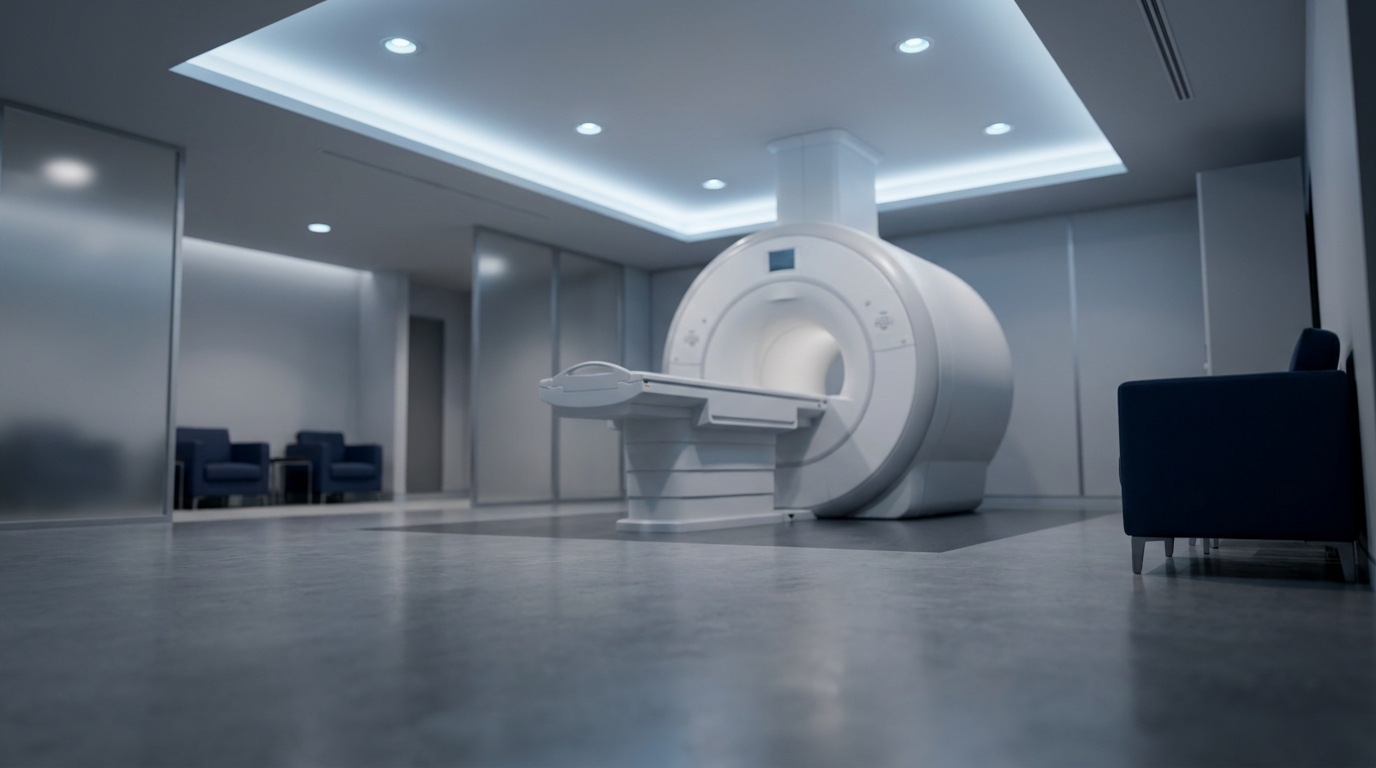
- Diagnostic imaging. MRI machines, CT scanners, X-ray and fluoroscopy systems, ultrasound equipment. These are the largest deals in medical financing and typically require documentation beyond a basic application, particularly for large imaging suites in the high six or seven figures.
- Dental and orthodontic equipment. Dental chairs and delivery units, CBCT (cone beam CT) imaging systems, CAD/CAM milling units for same-day crowns, intraoral scanners. Dental practices finance some of the most equipment-intensive buildouts in healthcare, and lenders who work with dentists understand the pattern.
- Surgical and procedural equipment. Surgical lasers, endoscopes, laparoscopic systems, infusion pumps, electrosurgical units. Deal sizes run from a few thousand dollars for basic instruments to well over $500,000 for robotic-assisted surgical platforms.
- Lab and monitoring equipment. Clinical analyzers, point-of-care testing equipment, patient monitoring systems, autoclave sterilizers. These typically fall in the $5,000 to $80,000 range and often qualify for app-only same-day processing.
- Health IT hardware. Some programs finance the hardware portion of an EHR or practice management system implementation. Software licensing and training are soft costs that may or may not be covered, so confirm the scope before you finalize the vendor agreement.
- Used medical equipment. Most programs approve used equipment, generally up to about 10 years old. Equipment from established manufacturers with active secondary markets (GE HealthCare, Siemens Healthineers, Philips, Stryker, Zimmer Biomet) tends to be more financeable than off-brand or obsolete models, because the lender's collateral position is stronger when a real resale market exists.
One point worth understanding about medical equipment specifically: it tends to hold its secondary-market value better than most non-medical business equipment. A well-maintained imaging system from a major manufacturer is a real, recoverable asset for a lender. That backstop is part of why equipment financing often works when other products don't, and why large medical purchases can sometimes get approved even with credit profiles that wouldn't work elsewhere.
Leasing versus financing medical equipment: which makes more sense?
This decision is more consequential in healthcare than in most industries, because the pace of technology change isn't uniform across equipment categories.
Consider diagnostic imaging. A 3T MRI scanner purchased today may be substantially surpassed by newer scanner technology within five to seven years. If you financed it and own it outright, you are holding an asset that's harder to sell and harder to justify upgrading when the technology moves on. If you leased it under a fair-market-value lease, you can return it at the end of the term and lease the current generation. You are not stuck.
Now consider a dental chair. Its core mechanics improve incrementally, but a quality chair purchased today will serve patients for 15 to 20 years without meaningful obsolescence. Financing that asset, owning it outright, and potentially taking a Section 179 deduction in year one often makes more financial sense than paying lease premiums over many years with no equity at the end.
The honest answer is that neither structure is universally better. The right choice depends on the equipment category, your tax situation, and how quickly the technology in that category evolves. Imaging, surgical robotics, and EHR hardware have faster cycles. Physical infrastructure like chairs, tables, and lab casework does not.
| Equipment financing (loan) | Equipment leasing | |
|---|---|---|
| Ownership | You own it at end of term | Lessor owns it (buyout option varies) |
| Monthly payment | Typically higher | Typically lower |
| Tax treatment | Section 179 deduction up to full cost in year one | Lease payments are operating expense deductions |
| Obsolescence risk | You bear it | Can return and upgrade at term end |
| Maintenance | Your responsibility | Often bundled into the lease |
| Best for | Durable assets: chairs, tables, lab instruments | Fast-evolving tech: imaging, surgical platforms, health IT |
If the purchase is over $150,000, run both scenarios with your accountant before signing anything. The Section 179 deduction can meaningfully change the effective cost of financing, and that calculation is worth doing properly.
What credit score and qualifications do you need?
Medical equipment financing follows the same general structure as other equipment financing, which we cover in detail in our equipment financing requirements post. The medical-specific nuances are worth knowing.
Credit score. Programs start at 550. Below 600, a down payment of 10 to 20 percent typically offsets higher risk and makes approval more likely. Most clean, straightforward approvals come in at 620 or above. Because the equipment is the collateral, lenders carry less risk than on an unsecured product, and that flexibility shows up in the credit minimums.
Time in business. Established practices with two or more years of operating history move through the process faster and with less documentation. Newer practices can qualify, but they should expect lenders to weight personal credit and down payment more heavily. A two-year-old dental practice with strong monthly deposits and clean personal credit has a solid application for most mid-size deals.
Revenue and bank deposits. This is where healthcare practices need to manage the presentation carefully. Because your bank deposits lag your actual collections by 30 to 60 days, a lender reviewing statements alone may see lower average monthly inflows than your real revenue. Bringing an AR aging report alongside your bank statements is not just helpful: for insurance-heavy practices, it can be the difference between an approval at the right size and one that undershoots what you need.
Deal size. App-only approvals up to $100,000 work the same way here as for any other business: a basic application, an invoice or quote, and a same-day decision in many cases. Over $100,000, lenders want three to six months of bank statements, and for larger imaging purchases, financial statements and tax returns. For a seven-figure MRI or CT scanner deal, the documentation package is closer in weight to an SBA loan than to a quick online application, and the timeline reflects that.
How insurance receivables actually affect your application
Here is the problem in concrete terms. Say your practice generates $200,000 per month in collections from patient services. You bill commercial insurers, Medicare, and Medicaid for most of it, and those payers reimburse in 45 to 60 days. In a given 30-day bank statement window, you might show $130,000 to $140,000 in deposits, reflecting claims from six to eight weeks prior. Your actual revenue is $200,000. Your bank statement documents $130,000.
A lender who doesn't understand this calculates your debt-service capacity against the lower number. The math is not wrong. The input is wrong.
The fix is an AR aging report. It shows outstanding claims by age bucket: current, 30 days, 60 days, 90 days, 90-plus days. A healthy aging, where most of the AR is in the current and 30-day buckets, demonstrates that your revenue is real and that the cash will arrive on its normal cycle. It transforms a documentation gap into a complete picture.
The Centers for Medicare and Medicaid Services publishes standard reimbursement timelines for Medicare fee-for-service claims. If your practice carries a significant Medicare payer mix, that data is worth having ready: it shows the lender that your AR lag is a systemic feature of the payment system, not a sign of billing problems or collection issues in your practice.
Practices with a high share of fee-for-service private-pay revenue don't face this issue, because cash arrives close to when services are delivered. But for any practice where 50 percent or more of revenue flows through insurance payers, managing how lenders read your cash flow is a real part of the application process.
What documents do you need?
For deals up to $100,000, the documentation is light:
- A basic credit application with your business and personal information
- A vendor invoice, manufacturer quote, or purchase agreement for the equipment
- Vendor or seller contact information
- Title documentation, if the equipment carries a title (most medical equipment does not)
For deals over $100,000, expect:
- Everything above, plus
- Three to six months of business bank statements
- An AR aging report (strongly recommended for any practice with significant insurance-payer revenue)
- Two years of business tax returns
- A profit and loss statement and balance sheet
- A summary of existing debt service, including any outstanding equipment leases or practice loans
If the purchase is from a dealer or manufacturer, they typically handle most of the equipment verification on their end. Private-party purchases, buying equipment from another practice, require a written purchase agreement drafted before you submit the financing application. Have it ready and the process moves significantly faster.
For a complete look at what lenders actually examine across all business loan products, that post covers cash-flow analysis, UCC lien searches, and the full underwriting picture that applies when your deal goes beyond app-only.
Honest downsides to know before you apply
Equipment financing is genuinely useful for most medical practices evaluating significant purchases. It is not the right answer for every situation. Here is what to be clear-eyed about before you sign:
- Technology obsolescence with financing. If you finance an MRI scanner and a substantially better system comes to market two years into your five-year term, you own the old machine. You can't hand it back. Selling financed imaging equipment before the loan is paid off often means a gap between the sale proceeds and what you still owe. For fast-moving technology categories, the lease structure transfers that risk to the lessor. That is part of what the lease premium is paying for.
- Soft costs may not be covered. Installation, calibration, staff training, and initial service contracts are sometimes outside the scope of what equipment financing programs will fund. A large imaging installation may require significant additional costs beyond the equipment price itself. Confirm exactly what is and isn't included in the finance amount before you execute the purchase agreement.
- A fixed monthly payment is a fixed monthly overhead. Unlike working capital tools that flex with your volume, an equipment loan payment arrives every month regardless of how busy the practice is. Practices in a stable growth phase absorb this easily. Practices navigating a revenue transition, a new location, or significant competitive pressure should model the payment as an inflexible fixed cost before committing to the term.
- Specialized or one-of-a-kind equipment is harder to finance. Equipment built for a narrow clinical application with a thin secondary market puts the lender in a difficult position if payments stop. If you are sourcing highly specialized or prototype-stage equipment, have the conversation with your lender before you finalize the vendor agreement. Not every piece of equipment qualifies, and it is better to know that before you are committed to a purchase.
If your practice also needs working capital alongside the equipment purchase, keep the two needs separate. Funding operating expenses through an equipment loan ties up the wrong tool for the wrong job. A separate look at how industry-specific practices approach equipment financing shows how this plays out in similarly cash-flow-intensive sectors.
Frequently asked questions
What credit score do I need for medical equipment financing?
Programs start at 550. Below 600, a down payment of 10 to 20 percent typically makes approval more likely by reducing the lender's exposure. Most clean approvals come in at 620 or above. Because the equipment serves as collateral, lenders extend more flexibility here than on unsecured business products. Credit matters, but it shares the decision with equipment quality, time in business, and how well your application tells the cash-flow story.
Is it better to lease or finance medical equipment?
It depends on the equipment category. Durable equipment that doesn't go obsolete, like dental chairs, exam tables, and lab instruments, is usually a better fit for financing: you own the asset at the end, can take the Section 179 deduction, and avoid paying lease premiums long-term. Imaging technology and surgical platforms that evolve quickly are often better candidates for leasing, so you can upgrade at term end without being stuck holding a depreciated asset. Run both scenarios with your accountant if the purchase is significant.
How do insurance receivables affect my equipment loan application?
Insurance reimbursement cycles mean your bank deposits lag your actual revenue by 30 to 60 days. A lender reviewing bank statements alone may underestimate your monthly cash flow by a meaningful margin. Bringing an AR aging report alongside your statements fixes this: it shows outstanding claims by age bucket and demonstrates that your revenue is real, just not yet deposited. For practices where 50 percent or more of revenue flows through insurance payers, presenting the AR aging is not optional, it is essential to getting the application sized correctly.
Can a newer medical practice qualify for equipment financing?
Yes, though the process differs from an established practice. Practices under two years old typically need stronger personal credit (620 or above), may be asked for a down payment, and should expect more documentation than an app-only deal. The key is matching your deal size to your stage: a newer practice financing a $25,000 exam room package is a very different application than one trying to finance a large imaging system. Lenders price risk relative to the exposure, and right-sizing the first deal matters.
Check your equipment financing options → See the full equipment financing guide